Printable thought record worksheet
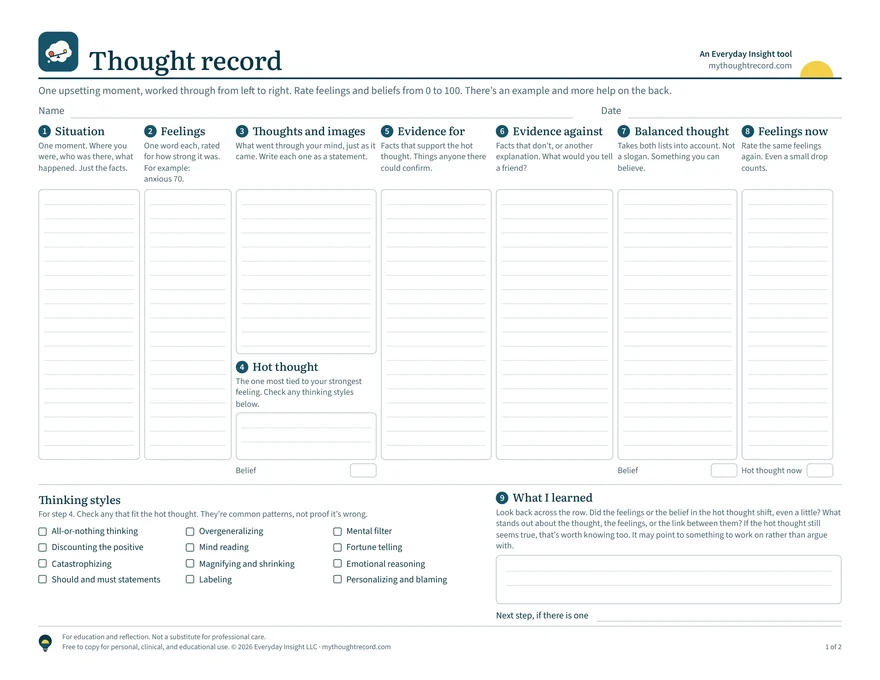
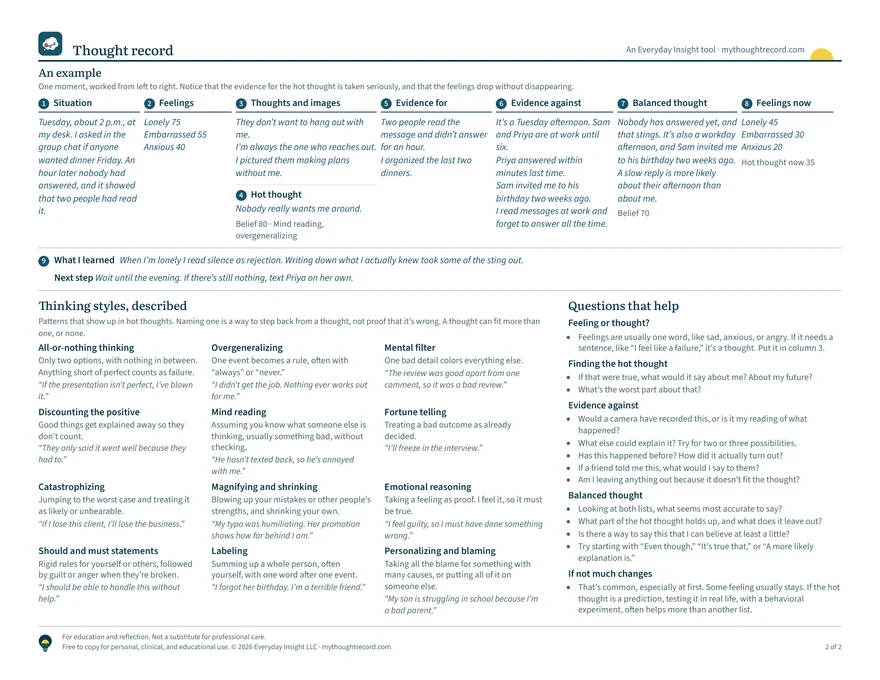
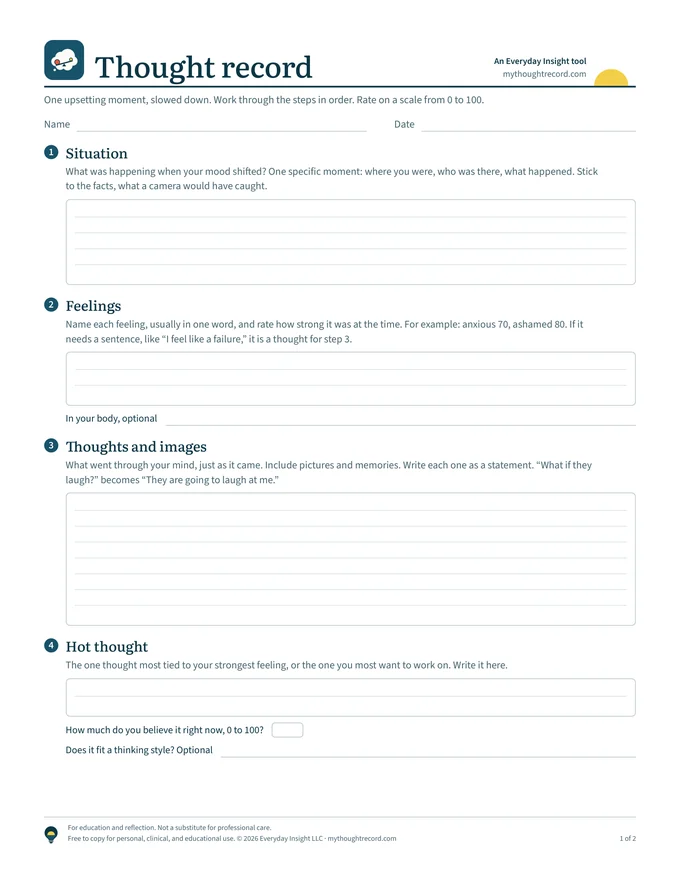
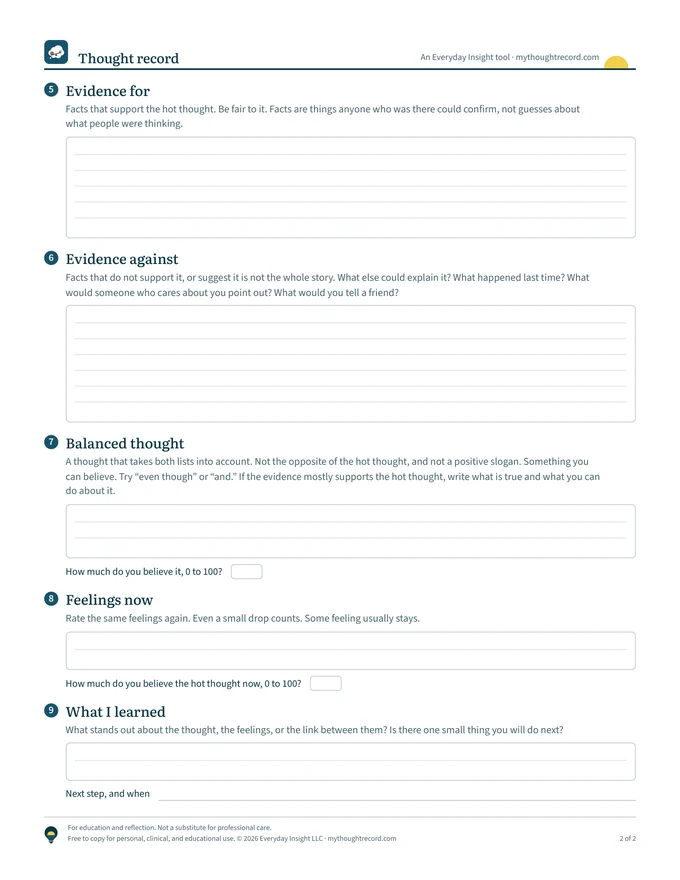
A free CBT thought record worksheet as a PDF, in two layouts. The column version fits the whole record on one landscape sheet, with a worked example and the thinking styles explained on the back. The guided version takes two pages, with a fuller prompt under each step. Print either one, or type into the fillable version on screen, in English or Spanish.
Download the worksheet
- Thought record, column version, fillable PDF
- Thought record, column version, printable PDF
- Thought record, guided version, fillable PDF
- Thought record, guided version, printable PDF
- How to do a thought record, client guide
- Both versions on a 0 to 10 scale
Which one to use
The column version is the one to reach for once the steps are familiar. The whole record sits on one page, so it’s quick to fill in and easy to look over in session, and the back has an example, the twelve thinking styles, and questions for the harder steps. It’s also the traditional format many clinicians already use.
The guided version works better while someone is still learning the steps. Each one gets its own space and a longer prompt, so it can be done without any help.
What’s on the worksheet
Both layouts follow the sequence most thought records share, with one step for choosing the hot thought and one at the end for what you learned.
- Situation. One specific moment, just the facts a camera would have caught.
- Feelings. Each feeling in a word, rated from 0 to 100.
- Thoughts and images. What went through your mind, written as statements.
- Hot thought. The thought most tied to your strongest feeling, and how much you believe it.
- Evidence for. Facts that support the hot thought.
- Evidence against. Facts that don’t, or that suggest it isn’t the whole story.
- Balanced thought. A view that takes both lists into account and that you can believe.
- Feelings now. The same feelings rated again, and how much you still believe the hot thought.
- What I learned. What stands out, and one small next step.
The step by step guide covers each part in more depth, and the worked examples show eight finished records, from a group chat that went quiet to a thought that turned out to be true.
The guided version
The same nine steps one after another over two portrait pages, with a few lines of guidance under each heading.
Printing and filling it in
- Every version prints on US Letter paper. Use one worksheet for each upsetting moment, so it helps to print a few at a time.
- To type into the fillable version, open it in a PDF reader such as Adobe Acrobat Reader or Preview on a Mac, fill in each box, and save a copy.
- If ten points are easier to use than a hundred, the 0 to 10 version is the same worksheet with a shorter scale.
- The column version prints in landscape on one sheet. Print it on both sides to keep the example and the thinking styles on the back. The guided version prints in portrait on two pages.
Other ways to do one
If you’d rather type, the online thought record has the same nine steps, with the feelings wheel and guiding questions built in, and it saves in your own browser. The Thought Record app keeps your records together on your phone and lets you jot down the first steps fast and finish later. The home page explains what a thought record is, the other names it goes by, and what the research says.
Free to copy
The worksheets and the guide are free to copy for personal, clinical, and educational use. Therapists can find group session materials and notes on using records in session on the page for therapists.